
Food security and nutrition
In a world where an abundance and variety of food seem to be a given for many, the harsh reality is that 2.4 billion people live with moderate or severe food insecurity.
Food Security — A Global Challenge
The 2.4 billion people without adequate food security constitute approximately 29.5% of the Earth's population. 735 million people also suffer from chronic hunger. The numbers have drastically increased in recent years, with 122 million more people living in chronic hunger compared to the period before the Covid-19 pandemic.
Food security is not just about sufficient quantities of food. It's about all people at all times having physical, social, and economic access to sufficient, safe, and nutritious food that meets their dietary needs for an active and healthy life. This involves a balance between availability, access, utilisation of food, and stability.
Yet, reports show that 3.1 billion people could not afford a nutritious diet in 2021. This points to a larger issue. Even with enough food produced globally, distribution, economic accessibility, and nutritional content are significant barriers for many.
Causes of Challenges and the Path to Zero Hunger
Conflict, poverty, disease, skewed trade structures, and climate changes drive the challenges related to food security. Paradoxically, it is those who produce food, farmers in the agricultural sector, who are often most vulnerable to hunger.
The fight against hunger and malnutrition is not just a moral and humanitarian effort but essential for economic development and social stability. The right to food is recognised as a fundamental human right by the UN, and the 172 states that have signed the convention have committed to ensuring enough and safe food for all.
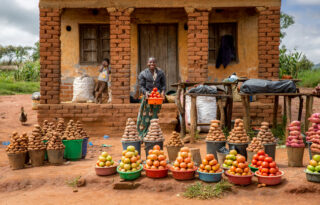
Investing in small-scale agriculture is pointed out as one of the most effective ways to combat hunger and poverty. This is supported by research and recommendations from organisations like the World Bank and FAO, which emphasise the importance of agriculture for poverty reduction and food security.
Future Solutions for Improved Food Security
The Ceres2030 study highlights the need for increased funding and recommends specific measures such as organising farmers, investing in vocational training for youth, social protection programmes, and developing resilient crop varieties that withstand more extreme climate conditions. This is precisely what The Development Fund has been working on since the organisation's inception in 1978. These measures require collaboration across sectors and levels to ensure a sustainable and inclusive approach to food security.
The Role of The Development Fund
The Development Fund, with our focus on food security and nutrition, is at the forefront of implementing solutions that increase the diversity of food production, improve farmers' access to inputs and technology, and promote knowledge sharing and climate change adaptation. This work is crucial for building robust food systems that can withstand future challenges.
The challenges with food security and nutrition demand global attention and action. By strengthening small-scale agriculture, promoting sustainable practices, and ensuring everyone has access to sufficient and nutritious food, we can take significant steps towards eradicating hunger and improving the quality of life for billions of people. Collaboration across borders, sectors, and social strata is key to achieving this goal.
Download report
Food Security and Nutrition
Learn more about The Development Fund's work towards strengthening the food security and nutrition for small scale farmers and rural communities.