Guatemala
Guatemala is a country with an extremely high level of inequality between the rich and the poor. The UN Food and Agriculture Organization (FAO) estimates that 53% of the population lives in poverty. Among the Maya people, this figure is as high as 83%.
The Development Fund works in the highlands of Guatemala, where indigenous people live densely and where climate change is most prevalent. Access to land and general infrastructure is lacking. Small-scale agriculture is the primary livelihood in rural areas. Extreme weather leads to erosion and diminishing patches of land on steep slopes, making life as a smallholder farmer challenging. Many migrate out of the country or are forced to work as day laborers on lowland plantations. This affects both family structures and the upbringing conditions for children.
There is also a struggle to preserve various Maya languages, cultures, and traditions. Private companies continually attempt to gain access to indigenous territories without dialogue with the local population. Corruption among the elite and impunity for politicians prevent many deep wounds from the civil war, particularly those carried by Maya women, from healing.
The Development Fund in Guatemala
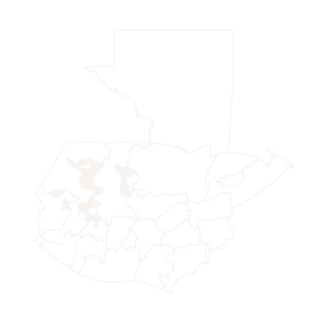
The Development Fund implements projects in various areas in the regions of Huehuetenango, Quiché, San Marcos, Totonicapán, and Chimaltenango in Guatemala. Implementation areas are highlighted in white.
Food security and nutrition
In our efforts to enhance food security and nutrition for small scale farmers, The Development Fund has developed its own model for climate adaptation. In Guatemala, we utilise participatory methods in vulnerability assessments and the development of action plans to reduce vulnerability. This model, which we call Climate Adapted Villages, is employed in several communities and leads to increased awareness and ownership of measures that strengthen adaptive capacity. For example, many villages identify water scarcity and drought as major challenges in their vulnerability assessments, and they develop plans for rainwater harvesting, tree planting, and protection of drinking water sources as measures.
Biodiversity in agriculture
Traditionally, indigenous people in Guatemala have had significant knowledge about the biodiversity within their own territory. However, government permits to promote genetically enhanced species for greater production have posed a threat to Mayan science and philosophy. Through seed banks, indigenous communities are reclaiming control over seed access, thereby strengthening both their culture and food security. Through The Development Fund's partners, impoverished indigenous people gain access to quality seeds tailored to local conditions and climate, achieved through seed testing at various altitudes and different soil types. There is particularly high demand for seeds that can withstand a hotter and drier climate. Through The Development Fund, small-scale farmers in Guatemala have also joined a larger plant breeding network in Central America to identify the best varieties of maize and beans.
Management of natural resources
Guatemala, like other countries in the region, is heavily affected by climate change. Hurricanes, droughts, and floods are becoming increasingly frequent. A more sustainable management of natural resources is crucial for the country to address future challenges. Our projects include participatory forest management to reduce deforestation, rebuilding degraded land due to depletion and erosion, local climate adaptation in agriculture, and preservation and secure access to high-quality seeds.
Green credits and savings and loan groups
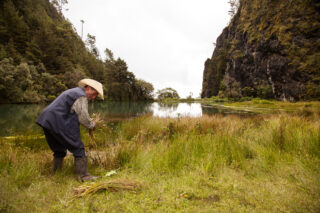
Agriculture is the primary source of income for poor families in rural Guatemala. However, starting to increase income and productivity on their small plots of land can be challenging. A major issue is their lack of access to credit to invest in tools and necessary inputs. Small scale farmers are usually not qualified for loans from national banks, often due to the absence of valid property documents. For farmers who do receive loans, the price they pay for inputs is very high due to exorbitant interest rates. In The Development Fund's projects, we have introduced a green credit scheme, where farmers can take out loans at a lower interest rate in exchange for implementing an environmental measure on their farm or in their community. The farmers pay back the loan after the harvest when they have sold their goods in the market.
To ensure increased income and alternative sources of income, it is necessary for small scale farmers to have better market access, opportunities for increased participation in the entire value chain, and access to credits and business training. Due to a large migration of youth in the region, it is especially important to offer this group new knowledge and real opportunities. The Development Fund's projects include organising farmer cooperatives to strengthen market access, access to microcredits and savings, as well as business training for youth.
Women's rights and equality
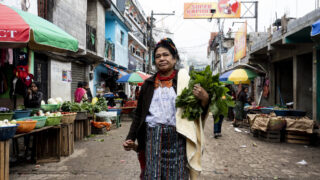
There is a prevalent male culture in Central America that leads many women to experience discrimination, violence, and little control over their own bodies. Women also have limited access to education, and many drop out early in elementary school. Early pregnancy is a widespread issue. Although women actively work in agriculture, they often do not have the right to own land. The Development Fund works to strengthen both grassroots organisations and our partners' awareness of gender equality. We strive to integrate a gender equality perspective in the projects that are to be maintained in the organisations' own strategies and regulations. Together with our partner organisations, we strengthen women's groups and women's cooperatives, with leadership training, self-confidence courses, and income-generating activities.
Strengthening civil society
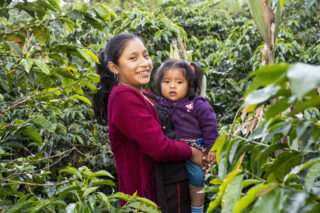
A strong and inclusive civil society is important for democracy building and social development. In Guatemala, The Development Fund works to strengthen civil society through the establishment of various types of grassroots organisations and measures to enhance our partners. The Development Fund aims to enable our local partners to participate in political processes both locally and globally. For example, our partner organisations in Guatemala participate in global meetings on the Plant Treaty. National and international work on seed policy is a priority in the region.
Climate adaptation and resilience
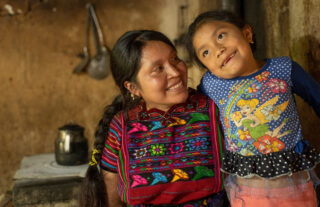
Guatemala is one of the areas in the world most affected by climate change. Extreme weather events such as prolonged droughts, heavy rainfall, floods, and temperature fluctuations are occurring more frequently. In the highlands, new plant diseases are now appearing that previously only occurred in the lowlands. The effects of climate change are exacerbated by ecosystem degradation, mainly deforestation, which increases the risk of landslides and erosion and destroys water sources. Together with partner organisations, The Development Fund strengthens the resilience of communities in Guatemala to climate-related challenges. Through participatory plant breeding, we identify seeds that are resistant to drought, insects, and diseases. By building water tanks, families are able to irrigate during the challenging dry season. Forest planting prevents erosion and preserves water sources. With tight storage silos, the valuable harvest is protected against moisture and rodents, etc. Such measures increase disaster preparedness, strengthen sustainable production systems, and create income opportunities.
Donors and grants
Community-based agro-biodiversity systems for improved livelihoods and climate resilience
Donor: Darwin Initiative (a programme of the Department for Environment, Food and Rural Affairs, UK Government).
Duration: 01.07.2023 – 31.12.2025
Total funding: 600 000 British punds (approximately 8 000 000 NOK)
Overarching goal: Improve the living conditions and climate adaptation of indigenous peoples and farming families in Central America through sustainable use of local agro-biological diversity. Local agricultural production systems are strengthened through participatory plant breeding, networks of seed banks, and the collection of wild seed types.
Number of households: 5000 families (in Guatemala, Costa Rica, Honduras and Nicaragua).
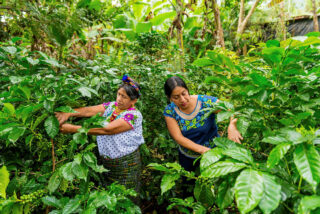
Green coffee credits in Guatemala
Donor: Peter Opsvik A/S
Duration: 01.01.2024 – 31.12.2026
Total funding: 1,5 million (500 000 NOK each year)
Overarching goal: Increased climate resilience and improved living conditions for small coffee producers in Guatemala.
Number of households: Approximately 324
Climate Resilience Rural Livelihoods Programme Guatemala
Donor: Norwegian Agency for Development Cooperation (NORAD)
Duration: 2021 - 2025
Total funding: 43 500 000 NOK
Overarching goal: Increased climate resilience and well-being for rural village communities in Guatemala. Improve food security, nutrition, and economic independence for households in rural areas. Enhance public services and legal frameworks in line with the needs, rights, and priorities of village communities, and give rural women and marginalised groups increased influence and recognition in their households, grassroots organisations, and communities.
Number of households: 6,800