Ethiopia
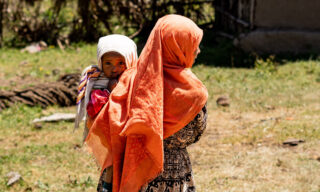
Ethiopia is one of the poorest countries in the world. More than 25 million Ethiopians live in poverty, with poverty most prevalent in rural areas.
Approximately 80% of the population in Ethiopia are farmers or pastoralists (livestock nomads). They are entirely dependent on agriculture and livestock for survival. Limited access to water, land degradation, erosion, and lack of access to new technology hinder agricultural production. This, in turn, weakens the population's food security.
In addition to displacements caused by conflicts and the associated challenges for communities in securing sustainable livelihoods, climate change has led to long periods of drought and new challenges for the population. Since The Development Fund began working in Ethiopia in the early 1980s, we have worked to strengthen people's food security and livelihoods by increasing their capacity to conserve natural resources and adapt agricultural production to a changing climate. Our projects include training in sustainable agricultural techniques, forest conservation, and market access.
The Development Fund in Ethiopia
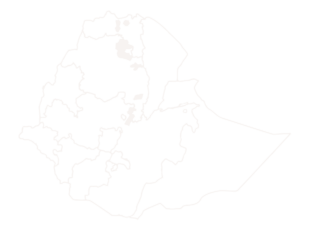
The Development Fund implements in various areas in the regions of Tigray, Amhara, and Oromia. Implementation areas are marked in white.
Food security and nutrition
To ensure sufficient and nutritious food for small-scale farmers in Ethiopia, training in climate adaptation is a crucial part of The Development Fund's work. The training includes various techniques to preserve soil moisture, prevent erosion, and improve soil quality, as well as the use of new and multiple crops on the same plot. Access to water is vital. Repairing old irrigation systems, building wells, and implementing various systems to direct water to agricultural areas are central to our work. We also support efforts to rehabilitate degraded lands. This is done through soil conservation techniques such as terracing, tree planting, and developing systems that better conserve water resources and enable irrigation. In this way, dry lands are transformed into green hills and fertile fields. The Development Fund has also developed a model for climate adaptation. In Ethiopia, we use participatory methods in vulnerability analyses and the development of action plans. This model, which we call climate-adapted villages, is used in several communities and leads to increased awareness and ownership of measures that enhance adaptability.
Climate adaptation and resilience
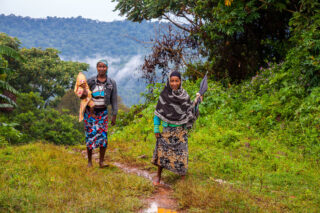
The November 2020 breakout of armed conflict in northern Ethiopia has had devastating impact on the lives and livelihoods of the population resulting in, inter alia, the loss of lives, depletion of livelihoods, displacement, food insecurity, macro-economic instability and limited access to critical imports, particularly affecting already vulnerable rural communities. The situation has been further exacerbated by climate-related shocks and stresses, including both drought and floods, especially affecting rural communities across the country.
In response to the unfolding situation, we have worked closely with partners and affected communities to build resilience to withstand such conflict and climate-related shocks through immediate support in the sector of agriculture, including the direct provision of seeds, tools, livestock and poultry as well as support to irrigation and to strengthen the basis for rural livelihoods. Our work has become an important complement to direct life-saving humanitarian assistance, seeking to provide conflict affected rural communities with inputs to resume agriculture and related livelihoods that are vital to safeguard against further suffering and displacement.
Biological diversity in agriculture
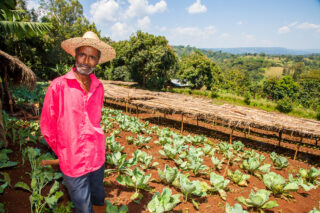
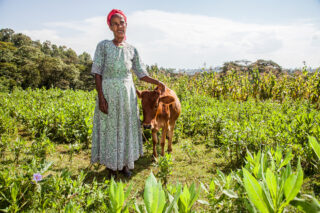
The Development Fund actively works to establish local seed banks where farmers can store seeds, borrow seeds (in case the previous crop failed), and preserve collections of various local and traditional seed varieties. Training is provided on how to manage the seed banks, how best to store the seeds, and responsible operation of the seed banks. Farmers are also involved in identifying the local varieties available in their area and testing which of these they want to use on their own farms. Through the seed banks, farmers gain access to varieties from other areas as well as from the national gene bank.
Management of natural resources
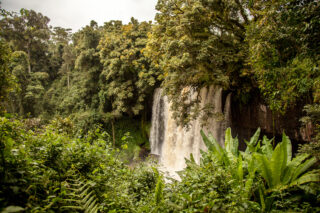
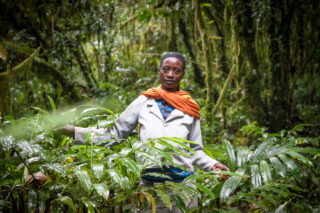
Forest conservation is important for the climate at both a global and local level. Ethiopia is a key partner country for Norway's climate and forest initiative. In collaboration with local partners, we work to reduce deforestation in Ethiopia's second-largest forest area in the southwest of the country. Through participatory forest management, local communities are granted the right to use and manage the forest. We also work to secure collective property rights over the forest areas. By strengthening local communities' rights over the forest, we also secure the livelihoods of forest-dependent groups. Many people live off honey, coffee, and spices that grow in the forest. We strive to ensure that the rights of forest communities are maintained and that their contributions are recognised in the efforts to preserve Ethiopia's forests.
Green credits and savings and loan groups
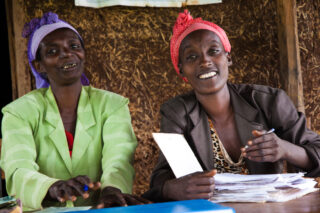
Agriculture is the primary source of income for poor families in rural Ethiopia. To ensure increased income and alternative sources of income moving forward, there is a need for better market access, increased participation in the value chain, and vocational training. Getting started with increasing productivity on one's small plot of land to boost income can often be tough. In The Development Fund's projects, farmers can take out a small loan at the start of the season, which can be used to buy seeds, tools, or to support livestock farming. The loan is repaid by the farmers after the harvest when they sell their goods in the market. The Development Fund's projects also include organising farmer cooperatives to strengthen market access, savings and loan groups, vocational training, and improving conditions at schools so that more complete primary education.
Women's rights and equality
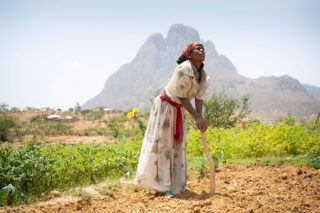
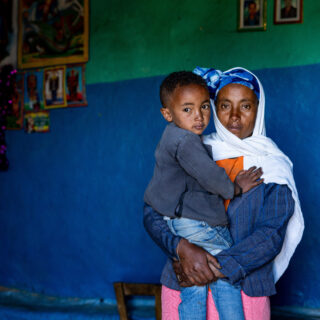
Ethiopian women experience daily that their rights are not respected. They have less access to and control over resources, few income opportunities, and limited access to credit. Many women are systematically subjected to violence, abuse, and genital mutilation. The Development Fund has extensive experience with savings and loan groups or specific women's cooperatives as measures to strengthen women's rights. By starting small businesses, women earn their own incomes and also contribute to the household economy. This provides women with an opportunity to demonstrate their capabilities, and often leads to increased respect both at home and in the community at large.
Strengthening civil society
A strong and inclusive civil society is important for building democracy and developing society. In Ethiopia, The Development Fund works to strengthen civil society through the establishment of various types of grassroots organisations and measures to enhance our partners. We also work to empower women, youth, and marginalised groups' rights. Through this work, opportunities are created for participation in decision-making processes.
Implementing partners
Canadian Food Grain Bank (CFGB)
Alliance of Bioversity International and the International Center for Tropical Agriculture (CIAT)
CIMMYT (The International Maize and Wheat Improvement Center)
HELVETAS
iDE
ORDA Ethiopia
Ethio Wetlands and Natural Resources Association (EWNRA)
Women Empowerment Action(WE-Action)
The Relief Society of Tigray (REST)
Environment, Biodiversity & Climate Change Forum, (EBCCF)
Donors and grants
Climate Adaptation and Rural Development II
Donor: Norwegian Agency for Development Cooperation (NORAD)og Utenriksdepartementet
Duration: 2021-2025
Total funding: 153 MNOK
Overarching goal: Food security and nutrition, income generation and livelihood, women's empowerment and inclusion.
Number of households: 43,600
Scaling Conservation Agriculture based sustainable intensification in Ethiopia (SCASI)
Donor: Norwegian Agency for Development Cooperation (NORAD)
Duration: 2022-2024
Total funding: 45 MNOK
Overarching goal: Conservation agriculture, food security, and soil conservation
Number of households: 15,000
REDD+ Participatory Forest Management in Southwest Ethiopia Phase III
Donor: Norwegian Agency for Development Cooperation (NORAD)
Duration: 2021-2025
Total funding: 39,5 MNOK
Overarching goal: Participatory forest management, forest livelihoods and policy advocacy
Number of households: 26,454
Food Security and Livelihoods programme (nexus)
Donor: The Norwegian Ministry of Foreign Affairs
Duration: 2021-2024
Total funding: 60 MNOK
Overarching goal: Food security, agriculture, rural livelihoods
Number of households: 50,000