
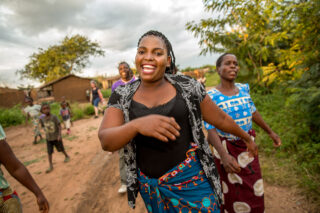
About The Development Fund
The Development Fund works to combat hunger and poverty. Our vision is a sustainable and just world. We contribute to strengthening small-scale farmers when climate change leads to extreme weather and more difficult cultivation conditions. Every year, we reach out to half a million people in Africa, Asia, and Central America.
The Development Fund is a Norwegian NGO with headquarters in Oslo
For over 45 years, we have worked in some of the poorest and most climate-vulnerable areas in the world. We collaborate with local communities for lasting changes and increased justice so that they can overcome hunger, handle crises, and create positive local development. We reach over a million people in rural areas of Africa, Asia, and Central America.
Our values
Our values are sustainability, solidarity, equality, and integrity. These should permeate everything we say and do. The connection between food, environment, and development is clear. Food production worldwide is threatened by climate change and the overexploitation of natural resources. It is the poorest among us who are hit the hardest by climate changes.
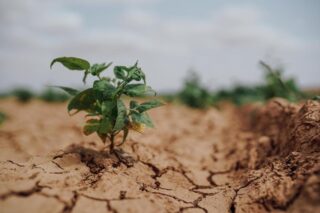
Sustainability
The Development Fund operates based on the principle of sustainable development, and our work is aimed at improving the livelihood of both current and future generations environmentally, economically, and socially.
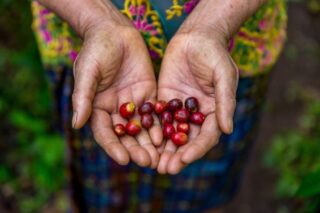
Solidarity
The Development Fund works based on a fundamental principle of solidarity with impoverished people in the Global South.
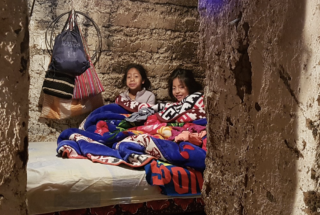
Justice
The Development Fund works for a just world based on human rights, equality, and democratic principles.
Participation
The Development Fund works to increase the participation of impoverished people in processes that affect their lives.
Read our organisational strategy here.
Our history
1978
On March 6, 1978, The Development Fund was formally established and decided to support The Dominique Pire Foundation's peace island in Mali. The initiators were members of "Framtiden i våre hender" (The Future in Our Hands) with Olav Benestad at the forefront. The core of The Development Fund's work is assistance towards self-help. The projects are based on the principle that development must be adapted to local conditions and occur on the terms of the poor.
1980
The Development Fund supports projects in Indonesia, India, Pakistan, and Portugal.
1982
Nepal and Ethiopia become new project countries. The focus is on rural community development with various measures to provide poor people with new and better opportunities for their futures.
1984
The Development Fund initiates projects in Sri Lanka.
1985
Bob Geldof's engagement in relation to the drought disaster in the Horn of Africa serves as the starting point for the Development Fund's collaboration with "Forente artister" (United Artists) in Norway. Revenues from the album "Sammen for Livet" (Together for Life), the attention around "Live Aid/ Band Aid," and money from the "Rock on the Dock concert" give The Development Fund a new driving force. The same year, it participates in NRK's TV campaign, "Ungdomskampanjen" (The Youth Campaign), along with a number of youth organisations. The Development Fund quadruples its turnover compared to the previous year.
1989
The Development Fund links all its partner organisations in Asia together in a separate network for better utilisation of resources and knowledge, so that the partner organisations can learn from each other. The Development Fund receives funds from the TV campaign "Women in the Third World."
1990
As the first Norwegian organisation, it starts systematic work with seed diversity and brings this up to the political level, through cooperation with the Filipino organisation SEARICE.
1991
Together with other Norwegian aid organisations, The Development Fund organises one of the first airlifts of emergency aid to a free Eritrea.
1992
Conducts Operation Day's Work (Operasjon Dagsverk) for the first time, together with the Norwegian People's Aid, SAIH (The Norwegian Students' and Academics' International Assistance Fund), and the Rainforest Foundation Norway.
1994
The Development Fund enters into a framework agreement with Norad and has more than 30 projects. For the first time, all collaboration partners meet at a seminar in Oslo. The Development Fund's own global network is formed for the exchange of experiences, knowledge, and cooperation across countries, regions, and continents.
1995
A reverse evaluation is conducted. The collaborating partners evaluate The Development Fund. This represents a clear break from the established perception of the donor/recipient relationship, and it reflects The Development Fund's collaboration model with its partners, based on mutual respect, cooperation, and trust.
1996
The Development Fund, along with four other organisations in Norway, is awarded the Norwegian Telethon (TV-aksjonen) with the theme "Environment for Life". It actively participates in the work with the World Food Summit organised by the UN, and represents Norwegian NGO's in the Norwegian delegation.
1997
Takes the initiative to start the Drylands Coordination Group (TKG), which works with research and capacity building on topics related to the dryland areas of Africa.
1998
The Development Fund celebrates its 20th anniversary.
2000
The Development Fund intensifies its efforts on biological diversity and fully starts working with three regional networks: in Africa, Asia, and Central America.
2001
Participates in the first World Social Forum in Brazil and leads the work on the first Globalisation Conference in Norway.
2002
The Development Fund is part of the official Norwegian delegation to the World Summit on Sustainable Development in Johannesburg – the World Food Summit – five years later (WSSD). It has become a recognised actor in the globalisation debate and is part of the Norwegian delegation to the "World Food Summit – five years later."
2003
The Development Fund celebrates 25 years and is awarded Operation Day's Work (Operasjon Dagsverk) to benefit war-affected youth in Sri Lanka. As a result, Spire is established as The Development Fund's youth organisation. Malawi becomes a new project country. The other project countries are Ethiopia, Nepal, and Sri Lanka. The work is now organised into four thematic programmes: Drylands, Biodiversity, Civil Society, and Food Security.
2004
Participates in founding the Trade Campaign network, which works for an international trade regime that supports and protects the world's poor countries and people.
2005
The tsunami hits, among other places, Sri Lanka during Christmas 2004, and becomes The Development Fund's main focus that year. Launches the Coastal Action for tsunami victims, which receives praise from, among others, Norad and the UN's Food and Agriculture Organization, FAO.
2006
A new major initiative on biodiversity in agriculture is launched. The work is elevated to a political level, to ensure farmers' rights to use, conserve, and develop seed.
2007
The Development Fund establishes its own country office in Addis Ababa after entering into strategic cooperation with the embassy two years earlier. Initiates a major focus on livestock nomads in Ethiopia. Is awarded Operation Day's Work with projects for youth in Central America. Establishes Environmental Movements in the South (Emis) together with The Rainforest Foundation Norway and WWF-Norway.
2008
The Development Fund celebrates its 30th anniversary. Zambia becomes a new project country. Establishes a joint country office in Malawi together with two British organisations, trying out an innovative collaborative project for agricultural development. Begins systematic cooperation with people living in Norway who have a background from the programme countries.
2009
Plays an active role in the work with the World Summit for Food Security, representing Norwegian NGO's in the Norwegian delegation.
2010
Establishes its own country office in Malawi.
2012
Initiates projects in Somalia.
2013
Intensifies the work on equality in all our programmes.
2014
Organises Operation Day's Work. The funds go towards efforts for youth - especially girls - in Ethiopia and Malawi.
2015
Launches a model for climate change adaptation: Climate Adapted Villages.
2016
Launches the campaign Start A New War to promote sustainable agriculture as the strongest weapon we have in the fight against poverty.
2017
Begins working with a climate-smart agriculture programme in Mozambique.
2018
Establishes country office in Somalia.
2019
Launches a groundbreaking new fundraising product called Development Investor.
2020
The Transform programme in Malawi was officially started as a collaborative programme between The Development Fund, Norwegian Church's Aid, and the Norwegian University of Life Sciences (NMBU) that contributes to increased food security and incomes for 180,000 farmers and their families. The website for Yourclimatefuture was also launched. The website illustrates how food production is affected by global warming.
2021
Kjeldsberg Coffee and The Development Fund started a unique coffee collaboration at the end of 2020, which became a success during 2021. Throughout the year, Kjeldsberg doubled its coffee production with double-certified coffee from farmers in our project areas.