
Honduras, Costa Rica and Nicaragua
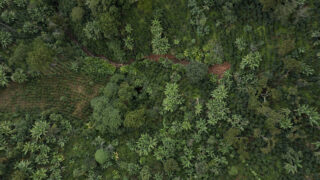
The Development Fund strengthens climate adaptation and food security in Guatemala, Costa Rica, Nicaragua, and Honduras through the Darwin Initiative, a programme focused on promoting sustainable agriculture and preserving biodiversity. The goal of the Darwin Programme is to improve the livelihoods of local populations by strengthening local food production systems.
The Darwin Programme: Biodiversity in Agriculture in Central America
The Darwin Programme runs from July 2023 to December 2025 and is implemented in collaboration with local partners such as ASOCUCH in Guatemala, UCR in Costa Rica, FIPAH in Honduras, and FECODESA in Nicaragua.
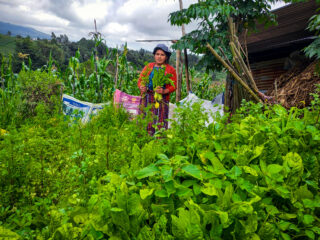
Together with farmers' organisations and research institutions in the region, scientific and local knowledge is combined to develop new varieties of maize and beans that are better adapted to local conditions and climate change. Activities include participatory plant breeding, establishing seed bank networks, and collecting wild seed varieties.
Objectives and expected outcomes
- Increased access to improved crop varieties: At least 3,000 families in 100 communities will gain access to new crop varieties developed through participatory plant breeding.
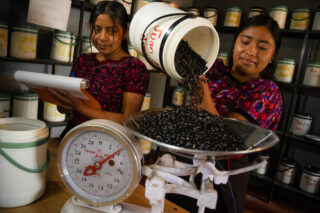
- Expansion of seed banks: At least 5,000 families will benefit from 36 community-based seed banks that facilitate the storage, sharing, and development of crop varieties adapted to local environmental conditions.
- Preservation of local seed varieties: At least 20 communities will participate in conserving seed varieties that are essential for food and nutritional security.
- Empowering women: The programme will enhance women's influence by ensuring their access to plant varieties that meet their preferences.

Sustainable agriculture through agro-biodiversity
The programme, “Community-based agro-biodiversity systems for improved livelihoods and climate resilience,” aims to address the challenges posed by climate change that already affect agriculture in Central America. By enhancing access to locally adapted seeds, the programme helps preserve the rich, native biodiversity of the region and strengthens small-scale farmers' ability to maintain food security despite changing climatic conditions. The programme also fosters collaboration between local seed banks and national gene banks to develop maize and bean seeds better suited to the effects of climate change.
Capacity building and knowledge transfer
A vital component of the programme is capacity building and knowledge transfer. This includes training smallholder farmers and their organisations in advanced agricultural practices, seed bank management, and participatory plant breeding. Additionally, the programme facilitates regional knowledge sharing and the exchange of best practices. It commenced with a gathering in August 2023 in Antigua, Guatemala, where stakeholders from the four countries exchanged insights and experiences on plant breeding and the dissemination of maize and bean varieties.
Commitment to a sustainable future
The Development Fund’s efforts in Guatemala, Honduras, Costa Rica, and Nicaragua exemplify how targeted collaboration and innovation can contribute to sustainable development and improved food security in the region. We will continue building on this work, learning from the communities we partner with, and pursuing the long-term goal of enhancing resilience and ensuring a sustainable future for Central America.