Malawi
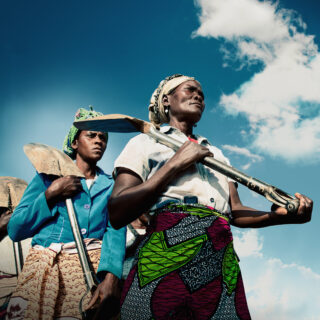
Malawi is one of the world's least developed countries. Over half of the population lives in poverty. The majority of the country's poor are small-scale farmers who are entirely dependent on what they grow on their small plots of land to survive.
Yields by small-scale farmers in Malawi are as low as 20% of their potential. Approximately 75% of the national crop production come from small-scale farmers who use traditional tools and techniques.
About two-thirds of the population depend on agriculture for survival, and the agricultural sector accounts for approximately 23% of the country's gross domestic product and 60% of total expert earnings. Agriculture accounts for over 76% of total employment.
Small-scale farmers in Malawi often have limited land for growing their food. Longer periods of dry spells and more frequent unstable rainfall have brought new challenges to farmers. Since The Development Fund started its work in Malawi in 2006, we have been working specifically to increase the capacity of small-scale farmers to adapt to climate change. This work contributes to increased food and nutrition security in the country.
The Development Fund in Malawi
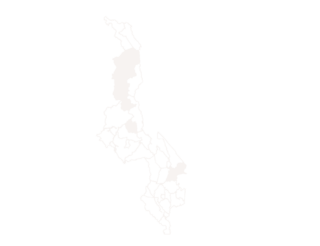
The Development Fund implements in the areas Rumphi, Mzimba, Ntchisi and Machinga i Malawi. Implementing areas are marked in white.
Food security and nutrition
Climate change has significant negative consequences for food production in Malawi. Climate adaptation in agriculture is crucial to ensure an adequate supply of nutritious food in the future. Through what we call the lead farmer model approach, tens of thousands of farmers receive training in climate-adapted agriculture to increase production and productivity. This includes various techniques to conserve moisture and nutrients in the soil and to intercrop multiple crops in the fields. The Development Fund promotes improved livestock production through a pass on system. Small-scale farmers are supported to access climate and weather services for timely implementation of corresponding advisories.
Biodiversity in agriculture
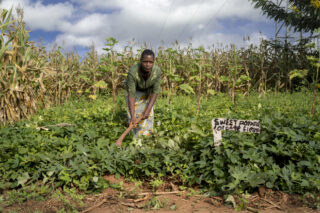
An important aspect of The Development Fund's programmes is the conservation of biodiversity in agriculture. Secure and stable access to quality seeds is crucial for every farmer. In Malawi, much of the work involves establishing seed banks where farmers can store seeds, and the promotion of farmer’s rights. Other farmers can also borrow seeds in case of crop failure. Through these seed banks, farmers collect a diversity of seed varieties that they test and compare with each other. This participatory seed selection enables farmers to choose the varieties best suited to their fields.
Natural resource management
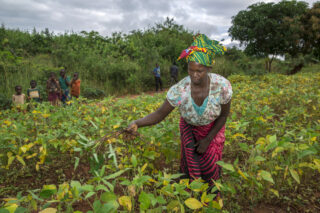
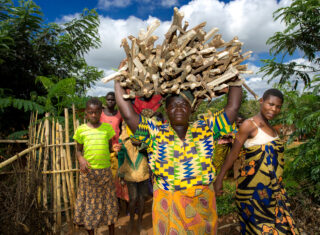
The limited land available for agriculture in Malawi has led to significant pressure on forest areas, watersheds and agricultural soils. Deforestation has resulted in soil depletion and drying up of water sources, which in turn has negative consequences for food production. Various techniques are employed to conserve moisture and nutrient content in the soil. We promote management of watersheds. To enhance soil fertility, multiple crops are intercropped. We also work on combining tree planting and food production by planting fruit trees. Access to manure from the farmers’ own livestock enables them to add extra nutrients to the soil. We also work on developing simple irrigation systems to make farmers less vulnerable to prolonged drought periods. The Development Fund promotes natural resource management through a Climate Adaptive Village approach.
Green credits and savings and loan groups
Agriculture is the cornerstone of Malawi's economy, and a vast majority of the population depends on agriculture for survival. In The Development Fund's projects, farmers can take out small loans at the beginning of the season. They can use the money to buy seeds, tools, or to engage in animal husbandry. The farmers repay the loan after harvest when they sell their produce in the market. Most small-scale farmers in Malawi operate their farms at a subsistence level. Knowledge of cultivating income-generating crops is limited. Few farmers are organised into cooperatives or other types of farmer organisations, which further limits their capacity and access to markets. The Development Fund supports the establishment of savings and loan groups at the village level. Through these groups, it is easier for farmers to take out small loans to start other off farm income-generating activities. This, along with other opportunities for accessing credit, is particularly important for women.
Women’s rights, gender equality and youth
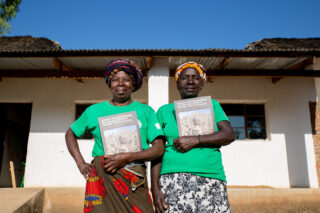
Through clubs called "Young Women Can Do it," The Development Fund works to strengthen women's rights and positions in society. These youth clubs help increase girls' education and combat discriminatory practices in schools, local communities, and homes. One of the most effective methods to prevent early pregnancy is to ensure that more girls complete their education. The clubs actively work to combat violence and abuse against girls and women. Through the clubs, more girls also have the opportunity to start small businesses and earn their own income.
Empowerment of civil society
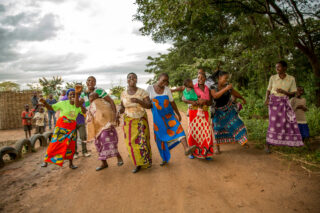
Democracy development and nation-building rely on a strong and inclusive civil society. The Development Fund works to strengthen civil society by empowering grassroot organisations, such as youth clubs. We also work to strengthen our partner organisations and their capacity to influence authorities. Establishing farmer organisations is also essential to strengthen farmers' voices and increase their opportunities to influence development processes that affect them. In Malawi, The Development Fund has particularly focused on raising awareness of farmers' rights related to seeds. We support civil society organisations' advocacy work to ensure that legislation protects their rights.
Implementing partners
Donors and grants
Climate Resilience Rural Livelihoods Programme Malawi-Mozambique (MAMO II)
Donor: Norwegian Agency for Development Cooperation (NORAD)
Duration: 2021-2025
Total funding: NOK70,000,000
Overarching goal: Increased climate resilience and well-being of rural communities in Malawi
Number of households: 26,000